Technical corner · 2 Oct 2022
One sail, and why it isn't slow
The sloop is so common that we picture a headsail when we think 'sailboat'. On a small, short-handed boat a single sail is the better answer — and it's quick.
The sloop is the rig we see most, so the word ‘sailboat’ tends to bring a headsail to mind. We ask two things of a rig: performance and easy handling. On a boat with crew and plenty to adjust, a headsail earns its keep. On a small, short-handed boat — an Optimist, a Laser, most dinghies — a single sail makes more sense.
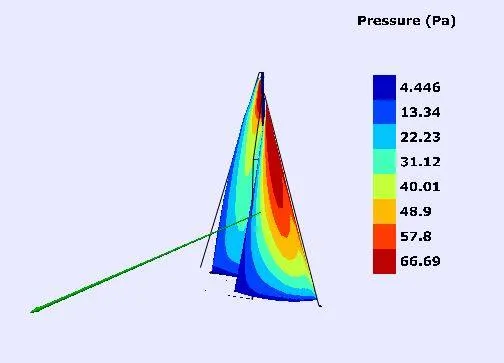
And a single sail is not slow. If it were, racing classes wouldn’t use it. In the pressure plots here, the sloop’s drive comes mostly from the headsail; the mainsail shows little — it largely works to clean up the flow over the jib. The U530’s simulation, with no headsail, shows pressure across the whole sail: it pulls hard on its own.
Towards the leech the blue areas grow. Upwind, those add drag rather than lift, and only earn their place off the wind. It’s why racing boats carry tall masts — more lift-making area, a better lift-to-drag ratio. The old gaff rigs, with low masts and long booms, are the opposite: happy reaching and cruising, but weak to windward.

Come and sail it.
Get in touch to ask about specifications, options, and availability — or to talk through whether it's the right boat for the water you sail.